

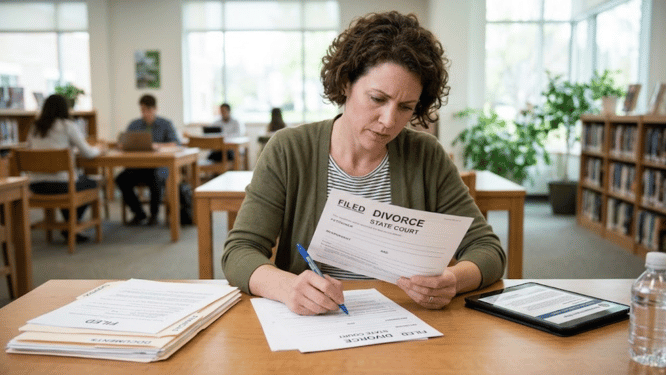
Yes, you can usually handle a divorce without hiring an attorney in the United States. Representing yourself is commonly called proceeding “pro se” or being self-represented. Whether doing so makes sense depends on your state, finances, children, property, and disagreements with your spouse.
Direct answer: You can generally file and complete a divorce without hiring a lawyer. The process is easiest when both spouses agree on every major issue. State rules still control filing, service, waiting periods, disclosures, fees, and required court appearances.
| Key question | What to know |
|---|---|
| Is a lawyer legally required? | Usually no; self-representation is generally permitted. |
| When is DIY divorce easiest? | When the case is uncontested and financially simple. |
| Do state rules differ? | Yes. Forms, fees, deadlines, residency rules, and procedures vary. |
| Can children be involved? | Yes, but custody and support can make the case more complex. |
| Can you hire limited legal help? | Often yes. A lawyer may review documents or handle selected issues. |
| Is a judge still involved? | Usually yes. A court must enter the final divorce judgment. |
Key Takeaways
- A self-represented divorce is possible in many U.S. courts.
- Uncontested cases are usually better candidates for handling without full legal representation.
- Filing requirements and court procedures depend on state and sometimes county rules.
- Property, retirement benefits, businesses, custody disputes, and safety concerns increase legal risk.
- Free court self-help services may provide forms and procedural information.
- Paying for one legal consultation can still be useful when you handle the remaining work yourself.
Can You Get a Divorce Without a Lawyer in the United States?
The answer to can you get a divorce without a lawyer is generally yes. California Courts expressly provide divorce resources for people completing the process without an attorney. New York Courts also offers forms and programs designed for qualifying self-represented spouses.
No single nationwide divorce procedure exists because marriage dissolution is mainly governed by state law. Residency rules, filing fees, forms, waiting periods, and service requirements can differ substantially. Start with the official court website for the state where you plan to file.
Handling your own case also does not remove your responsibility to follow court rules. A judge normally cannot give legal advice to either spouse. Court employees may explain procedures, but their assistance has limits.
When Is Divorce Without a Lawyer Most Realistic?

An uncontested divorce is usually the strongest candidate for self-representation. Both spouses should agree on the divorce and the major financial or parenting terms. Later disputes can make a previously simple case much harder.
New York defines an uncontested divorce as one in which the defendant agrees to or does not oppose the requested relief. Agreements may address property, finances, parenting time, support, and other issues. The court also warns that a case can become contested when disagreements develop.
A simple case often has fewer assets, debts, and disputed responsibilities. A complicated financial structure creates more opportunities for costly mistakes. Pension rights, real estate, businesses, investments, or hidden assets deserve careful attention.
Readers researching property-related legal concepts can also review Artandwriters’ deed of trust explainer. Property ownership and secured debts can become important during marital asset division. State law may affect how those interests are treated.
How to Get a Divorce Without a Lawyer
The exact procedure depends on your jurisdiction, but most self-represented cases follow a similar framework. Don’t rely on another state’s forms just because its process seems easier. Use instructions published by the court handling your case.
1. Confirm residency requirements. Check how long you or your spouse must live in the state or county before filing.
2. Determine whether the case is contested. Identify disagreements involving property, debt, support, custody, or parenting time.
3. Find official court forms. Use your state judiciary or local court website rather than unofficial templates.
4. Complete the required financial disclosures. Report income, assets, debts, and other required information accurately.
5. File the divorce papers. Submit the documents to the correct court and pay the applicable filing fee.
6. Serve your spouse correctly. Follow your state’s requirements for delivering the filed papers.
7. Complete any waiting period. Some states require time to pass before a divorce can become final.
8. Resolve remaining issues. Prepare an agreement or follow the court process for unresolved questions.
9. Submit final documents. Provide the court with the papers required for a final judgment.
10. Keep the signed judgment. Store certified copies where you can retrieve them later.
Official resources matter because even basic requirements can differ. California, for example, provides standardized divorce forms and local self-help assistance. New York supplies separate instructions and forms for qualifying uncontested cases.
How Much Does a Divorce Without an Attorney Cost?
Skipping full legal representation can reduce attorney expenses, but a self-filed divorce is not automatically free. Courts commonly charge filing fees, and additional expenses may arise for service or certified documents. Exact costs depend on the jurisdiction and circumstances.
New York provides a useful example of why you must check local requirements. Its court system lists minimum filing fees for an uncontested divorce and identifies several separate charges. Other states and counties use their own fee schedules.
People who cannot afford filing costs may have another option. Many courts offer applications requesting a fee waiver based on financial circumstances. Approval standards and required evidence vary by jurisdiction.
When Should You Consider Hiring a Divorce Lawyer?
Self-representation becomes riskier when substantial rights are uncertain or disputed. A small paperwork error may be correctable, while an unfavorable financial agreement can have lasting effects. Legal advice can be especially valuable before you surrender property or support rights.
Consider speaking with a family-law attorney in the situations below.
- A contested child custody or parenting dispute.
- Domestic violence, threats, coercion, or safety concerns.
- A house or other significant real estate.
- Pensions, retirement plans, or stock compensation.
- A family business or complex investments.
- Large joint debts or disputed liabilities.
- Suspected hidden income or assets.
- Disagreement about spousal support.
- Difficulty locating or serving your spouse.
- An international marriage, property, or custody issue.
New York Courts specifically warns self-represented spouses about property, debt, pensions, custody, support, and protection orders. A person may give up valuable rights without understanding the long-term result. That risk can exist even when both spouses initially describe the divorce as friendly.
For more plain-language legal background, browse the Artandwriters Law section. The site also explains concepts such as legal precedent and other U.S. legal topics. These resources provide general information, not advice for an individual case.
Can You Use a Lawyer Without Paying for Full Representation?
Hiring a lawyer does not always mean paying someone to manage every stage. Some attorneys provide limited-scope services for specific tasks. Your state’s professional and court rules determine what arrangements are available.
For example, you might pay an attorney to review a settlement agreement. You could also request advice about retirement benefits, property division, or an upcoming hearing. This approach may reduce costs while giving you professional guidance on higher-risk issues.
Court self-help programs can provide another source of assistance. California courts offer free self-help services for people without their own lawyers. Staff may explain forms and legal options, although they do not become your personal attorney.
Uncontested vs. Contested Divorce Without a Lawyer
| Issue | Uncontested divorce | Contested divorce |
|---|---|---|
| Agreement between spouses | Major issues are settled | One or more major issues remain disputed |
| Paperwork difficulty | Often more manageable | Usually more demanding |
| Hearings | May be limited | More court activity may be required |
| Evidence and discovery | Often limited | May become significant |
| Self-representation risk | Generally lower | Generally higher |
| Lawyer consultation | Still useful | Strongly worth considering |
Contested cases may involve discovery, witnesses, exhibits, motions, or trial preparation. Self-represented parties remain responsible for following the applicable evidence and procedural rules. California courts note that people without lawyers still must follow court procedures during trial preparation.
Agreement does not eliminate every legal risk either. A settlement can affect taxes, retirement benefits, debt responsibility, housing, insurance, and future financial security. Consider having an attorney review important terms before signing a final agreement.
Common Mistakes in a DIY Divorce
Using the wrong forms is one common problem. Filing in the wrong county or missing required service steps can also cause delays. Court websites should be your primary procedural source.
Financial mistakes can have larger consequences. Spouses sometimes overlook retirement accounts, secured debts, tax issues, or future support rights. A signed agreement can become difficult to change after the court enters judgment.
Deadlines create another concern. A person representing themselves generally receives no exemption from procedural requirements. Create a calendar for filing dates, responses, hearings, disclosures, and required classes.
Can You Get a Divorce Without a Lawyer if You Have Children?
Having children does not automatically require each parent to hire an attorney. Some states provide self-help forms for divorces involving children. The case may still require detailed parenting and child-support documents.
Custody disagreements make self-representation more difficult because important parental rights are involved. Courts must also apply state law when deciding unresolved custody and support questions. A consultation can help you understand the consequences of a proposed parenting plan.
Do not sign an agreement you do not understand just to finish the process quickly. Parenting schedules and decision-making provisions may govern family life for years. Read every provision and obtain advice when its effect is unclear.
Frequently Asked Questions
Can you get a divorce without a lawyer if both spouses agree?
Yes, can you get a divorce without a lawyer often becomes easier when both spouses agree on every major issue. This is commonly described as an uncontested divorce. You must still follow your state’s filing and court requirements.
Do you have to go to court for a divorce?
A court must generally enter a judgment before the marriage legally ends. An in-person courtroom appearance may not always be necessary. Procedures vary by state, county, and case type.
What is a pro se divorce?
“Pro se” means representing yourself instead of appearing through an attorney. You prepare and file your own paperwork. You are also responsible for complying with the court’s rules and deadlines.
Is an online divorce service the same as hiring a lawyer?
No. Document services may help prepare forms, but they may not provide legal representation. Read the provider’s terms carefully before paying for assistance.
What if I start the divorce myself and later need a lawyer?
You can generally seek legal representation after beginning a self-represented case. Hiring counsel later may help when disagreements or complicated issues arise. Tell the lawyer about existing deadlines and provide copies of everything already filed.
The Bottom Line
So, can you get a divorce without a lawyer in the United States? In many cases, yes, especially when the divorce is genuinely uncontested. The safest starting point is your state judiciary’s official divorce and self-help resources.
A simple filing does not mean every legal decision is simple. Property, debts, pensions, children, support, and safety concerns can create lasting consequences. Paying for targeted advice may be worthwhile even when you complete most paperwork yourself.
Before filing, collect your financial records and identify every issue that requires agreement. Then review the current instructions for the court handling your case. For broader educational reading, visit the Artandwriters Law section.