
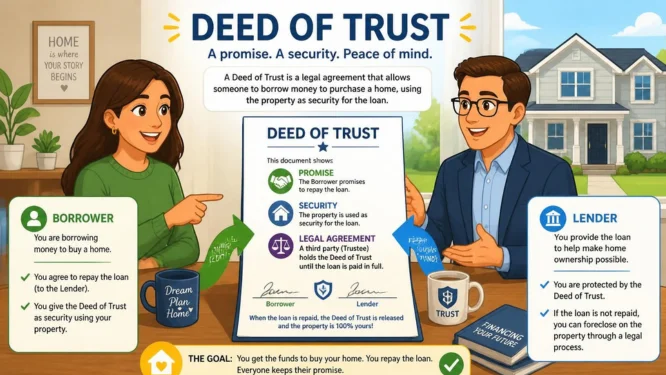
People asking “what is a deed of trust?” often encounter the term in a U.S. mortgage closing package. It is a security instrument that connects a real estate loan to the property. It also gives the lender legal remedies if the borrower fails to meet the loan terms.
A deed of trust is a real estate security instrument that connects a loan to property. It typically names three parties: the borrower, lender, and trustee. Depending on state law, the trustee may hold legal title or another security interest. The document may also permit a trustee sale after default.
| Key point | What it means |
| Main purpose | Secures a real estate loan with the property |
| Main parties | Borrower, lender, and trustee |
| Debt document | The promissory note contains the repayment promise |
| Default | State law and the agreement control foreclosure options |
| Payoff | A release or reconveyance clears the security interest |
| State differences | Title and foreclosure rules vary by jurisdiction |
Key takeaways
- The security instrument is different from the ownership deed.
- The promissory note is the borrower’s promise to repay the loan.
- A trustee has a defined role under the document and state law.
- Nonjudicial foreclosure may be available when law and contract allow it.
- Borrowers should review closing documents before signing them.
What Is a Deed of Trust and Why Is It Used?
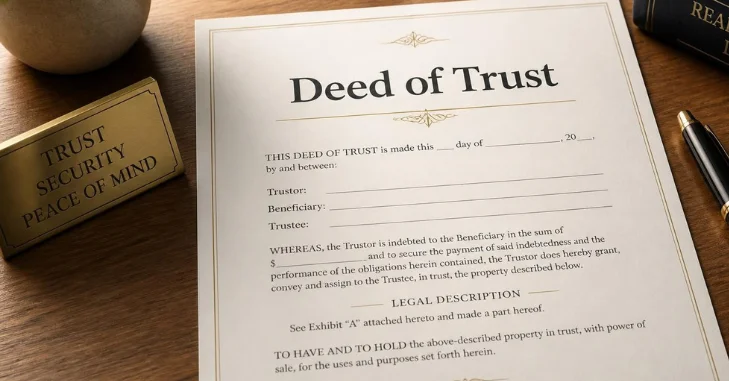
What Is a deed of trust protects a lender by making real property collateral for a loan. The borrower usually signs it at a purchase closing or during refinancing. The Consumer Financial Protection Bureau treats this document as a type of mortgage security instrument.
This security paper is not the same as the promissory note. The note contains the borrower’s promise to repay under stated loan terms. The security instrument ties that promise to the real estate used as collateral.
This distinction helps you read closing paperwork without confusing debt, security, and ownership. Artandwriters’ Real Estate section can provide more background on property topics. Each document has a separate legal job in the transaction.
How the Security Instrument Works
At closing, the borrower signs the note and the security document. The property then secures the promised repayment. The exact title arrangement depends on state law and the document’s wording.
- The borrower signs the loan note and the security instrument.
- The lender provides the loan funds under the agreed terms.
- The trustee receives the interest or authority described by state law.
- The borrower keeps using the property while making required payments.
- Payoff triggers a release, while default can trigger enforcement rights.
The instrument is commonly recorded in local land records after closing. Recording gives public notice that the property secures the loan. It also helps later buyers and lenders identify the existing security interest.
Who Are the Three Parties?
The three-party structure separates this document from a traditional two-party mortgage. The borrower is often called the trustor, while the lender is the beneficiary. A trustee is the third party named in the instrument.
| Party | Common name | Main role |
| Borrower | Trustor or grantor | Pledges the property as security and makes loan payments |
| Lender | Beneficiary | Provides funds and holds the secured financial interest |
| Third party | Trustee | Holds or administers the stated property interest under applicable law |
The trustee’s exact role is not identical in every state. A title company or similar entity often serves in this position. The trustee usually becomes more active at payoff or during an authorized foreclosure process.
Deed of Trust vs. Mortgage: Key Differences
Both instruments secure a real estate loan with property. Their legal structures can differ, especially in the parties involved and foreclosure process. State law determines which rules apply to a specific transaction.
| Feature | Trust deed | Traditional mortgage |
| Typical parties | Borrower, lender, trustee | Borrower and lender |
| Security structure | Trustee holds or administers a stated property interest | Lender usually receives a lien |
| Foreclosure | May allow a power-of-sale process | May require court action, depending on state law |
| Payoff | Often followed by reconveyance or release | Usually followed by satisfaction or release |
Many trust deeds include a power-of-sale clause. That clause can support nonjudicial foreclosure where state law permits it. Nonjudicial foreclosure still requires compliance with statutory notice and procedure rules.
For broader borrowing topics, Artandwriters’ Finance section can provide useful background. Security papers work alongside loan terms, payment duties, and federal closing disclosures. Reading these documents together gives a fuller picture of the transaction.
What Happens When the Loan Is Paid Off?
Full repayment ends the lender’s secured claim under the instrument. The lender or trustee then completes the required release or reconveyance process. The exact document name and recording steps depend on state law.
After payoff, homeowners should confirm several details. The goal is to ensure public records reflect the satisfied debt. Keep copies with the rest of your closing and loan records.
- The final payoff was credited correctly.
- The release or reconveyance was prepared as required.
- The release was recorded when local law requires recording.
- The property record no longer shows an active loan security interest.
Keeping payoff and release records can prevent later title confusion. These documents may matter during a future sale or refinance. A title company can also confirm whether the old security interest still appears in public records.
What Happens If the Borrower Defaults?
Default can activate remedies written into the loan documents. A power-of-sale clause may permit a trustee sale without a court order. Whether that process is available depends on the agreement and applicable state law.
A nonjudicial process does not remove borrower protections. States regulate notice, waiting periods, sale procedures, and other foreclosure steps. A lender or trustee must follow the governing rules before a sale can proceed.
Borrowers who receive default notices should read them promptly. They should contact the loan servicer about available options and deadlines. A licensed attorney can explain state-specific rights when foreclosure is possible.
What Should You Review Before Signing?
Closing documents create important financial and legal obligations. The CFPB recommends reviewing the Closing Disclosure and requesting other loan documents in advance. Borrowers should ask questions about terms they do not understand.
Check these items before signing. Compare them against the note and Closing Disclosure where appropriate. Ask the settlement agent about any mismatch or unclear language.
- Names of the borrower, lender, and trustee.
- The property address and legal description.
- The original loan amount and secured obligations.
- Default, acceleration, and power-of-sale language.
- Any riders that add or change loan terms.
- Occupancy, insurance, tax, and maintenance duties.
The Closing Disclosure generally arrives at least three business days before closing. Other documents can be requested from the lender or settlement agent before the appointment. Early review gives you more time to spot errors.
Why State Law Changes the Details
The same label can have different legal effects across U.S. jurisdictions. Some states treat the trustee’s property interest differently from others. Foreclosure procedures also vary based on statutes, loan terms, and local practice.
Artandwriters’ Law section offers broader legal explainers for readers building basic context. Still, general articles cannot replace advice about a specific property or foreclosure. State-specific questions should go to a qualified local attorney or housing professional.
This article provides general educational information, not legal advice. Rules can change, and individual loan documents can add important obligations. Always read the recorded instrument and current law that applies to your property.
What to Do Before Your Closing
Ask for your closing documents early and read them together. Compare names, property details, loan terms, and default provisions across the package. Raise errors with the lender or settlement agent before you sign.
If the documents raise state-law questions, get qualified local guidance. Foreclosure and title rules can differ sharply across jurisdictions. Understanding the paperwork before closing is easier than resolving confusion after a problem appears.
Frequently Asked Questions
Is a trust deed the same as a property deed?
No, the two documents have different purposes. A property deed transfers ownership from one party to another. A trust deed secures repayment of a loan with real estate.
Who owns the home under this arrangement?
The borrower normally keeps possession and beneficial use of the home. The trustee may hold legal title or another defined interest, depending on state law. That security structure does not mean the trustee lives in or controls daily use.
Can you sell a home while the loan is secured this way?
A sale is usually possible, but the secured debt must be addressed. The closing process commonly pays the loan and obtains the required release. Your loan terms may also contain provisions affecting a transfer.
What is a deed of trust in simple terms?
A deed of trust is a document that uses real estate to secure repayment of a loan. It adds a trustee to the borrower-lender relationship. Its biggest practical effects often appear at payoff or after default.
Is a trust deed the same as a promissory note?
No, the promissory note is the promise to repay the borrowed money. The trust deed provides the property-based security for that promise. Borrowers commonly sign both documents as part of the same loan closing.