

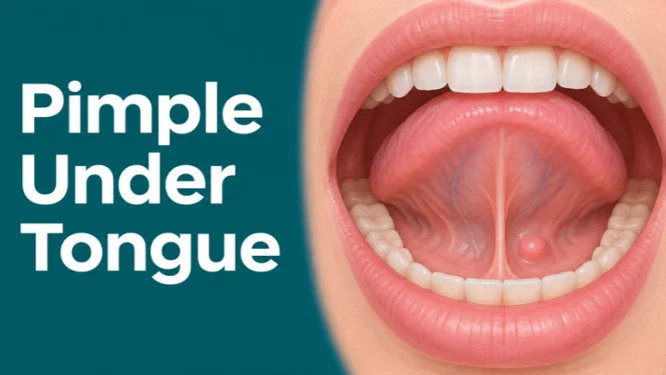
Finding a pimple under tongue can be uncomfortable and sometimes alarming. Most bumps inside the mouth are not acne because oral tissue has no typical skin pores. Common explanations include canker sores, irritation, blocked salivary glands, and other harmless mouth lesions.
A pimple under tongue is usually not a true acne pimple. It may be a canker sore, irritated tissue, or a saliva-filled cyst. Many small lesions improve within one or two weeks, but a persistent, growing, bleeding, or hard lump needs evaluation by a dentist or doctor.
Quick Facts About a Bump Under the Tongue
| Question | Quick answer |
|---|---|
| Is it usually acne? | No. True acne generally forms around skin hair follicles and pores. |
| Common causes | Canker sores, irritation, trauma, salivary cysts, and blocked salivary ducts |
| Typical healing time | Minor canker sores often improve within one to two weeks. |
| Should you pop it? | No. Squeezing or puncturing mouth lesions can worsen irritation or infection risk. |
| When should it be checked? | Persistent symptoms beyond about two weeks deserve professional evaluation. |
| Who can examine it? | A dentist, primary-care clinician, oral medicine specialist, or ENT physician |
Key Takeaways
* Most small bumps beneath the tongue are caused by noncancerous conditions. * Canker sores can occur on or beneath the tongue. * A ranula is a saliva-filled cyst that forms on the floor of the mouth. * Injury from teeth, food, dental work, or accidental biting can create sore spots. * Avoid squeezing, cutting, or attempting to drain the bump yourself. * Persistent lumps, bleeding, numbness, swallowing trouble, or unexplained growth need medical attention. * Regular dental examinations can help identify concerning oral changes early.
What Can Cause a Pimple Under Tongue?
Several conditions can create a small raised spot beneath your tongue. Appearance, tenderness, duration, and location can help narrow the possibilities. A clinician may still need to examine an unusual or persistent lesion.
1. Canker sore
Canker sores are among the most common explanations for painful spots inside the mouth. They usually appear as white or yellow sores surrounded by a red border. They can develop on the tongue, beneath it, or elsewhere on soft oral tissue. These sores are not contagious and often heal without treatment.
NIDDK reports that canker sores commonly resolve within one or two weeks. Minor injury, stress, and certain nutritional deficiencies may sometimes contribute to outbreaks.
2. Irritation or minor mouth injury
The tissue beneath your tongue is delicate and can become irritated easily. Sharp foods, accidental biting, dental appliances, or a rough tooth may cause localized swelling. A recent burn from hot food can also leave a tender spot. Minor irritation usually improves once the source is removed. Soft foods and gentle oral hygiene may reduce further discomfort during healing. Continued rubbing from a tooth or appliance may require dental treatment.
3. Ranula or salivary cyst
A ranula is a fluid-filled cyst that forms on the floor of the mouth. It develops when saliva leaks from a damaged or blocked salivary gland. The swelling may feel soft, smooth, or somewhat squishy. Small ranulas may cause few symptoms at first. Larger ones can interfere with speaking, swallowing, or normal tongue movement. A dentist or physician should evaluate enlarging or recurring swelling beneath the tongue.
4. Blocked salivary duct
Several salivary ducts open near the floor of your mouth. A blockage can sometimes cause tenderness or swelling near these openings. Symptoms may become more noticeable during meals because eating increases saliva production. The bump may appear close to the small folds beneath your tongue. Persistent swelling or repeated pain deserves a dental or medical examination. Treatment depends on what is blocking or irritating the duct.
5. Oral infection
Some infections can produce sores, swelling, or unusual patches inside the mouth. Viral, fungal, and bacterial conditions do not all look the same. Other symptoms can include fever, multiple lesions, swollen glands, or general illness. Cold sores differ from ordinary canker sores in both cause and typical location. NIDDK notes that canker sores occur inside the mouth and are not contagious. Fever blisters caused by HSV usually occur around the outside of the lips.
6. Oral papilloma or another benign growth
A small oral growth can sometimes resemble a wart or raised pimple. The National Cancer Institute describes oral papillomas as usually benign, wart-like growths. They can develop on the tongue and other areas inside the mouth. These growths may be pink or white and can vary in size. They are often painless, making them easy to overlook initially. Any unexplained growth that remains should be assessed rather than diagnosed from appearance alone.
7. A potentially serious oral lesion
Most mouth bumps are harmless, but persistent changes deserve attention. Oral cancer can develop on the floor of the mouth beneath the tongue. Possible warning signs include a lasting sore, lump, red patch, white patch, numbness, or swallowing difficulty. Having one of these symptoms does not mean you have cancer. Many common conditions cause similar mouth changes. The concern rises when a lesion fails to heal or develops other warning signs.
What Does the Color or Texture Tell You?
A white or yellow center surrounded by red tissue may suggest a canker sore. A soft, bluish, or translucent swelling can be more consistent with a salivary cyst. A rough, firm, or wart-like growth may have another cause and needs examination. Color alone cannot provide a reliable diagnosis. White and red mouth changes can occur in harmless and more serious conditions. Duration and associated symptoms often matter more than appearance alone.
What You Can Safely Do at Home
Many small, painful mouth sores improve with conservative care. The goal is to reduce irritation while the tissue heals. Home treatment should never involve puncturing or cutting the lesion.
* Rinse gently with warm salt water. * Drink enough water throughout the day. * Choose softer foods while the area is sore. * Avoid spicy, acidic, rough, or extremely hot foods. * Use a soft-bristled toothbrush. * Avoid tobacco products while the area heals. * Do not squeeze, pop, pierce, or drain the bump. * Ask a pharmacist about suitable over-the-counter mouth-sore products.
NIDDK notes that over-the-counter numbing gels may help with canker-sore discomfort. Antiseptic mouth rinses may also be recommended in some situations. Severe or recurring sores may require evaluation and prescription treatment.
Why You Should Not Pop a Bump Under Your Tongue
Skin pimples develop through processes involving follicles, oil, and clogged pores. Tissue inside your mouth works differently, so squeezing the bump does not treat its underlying cause. Manipulating it can create extra trauma and make the area more painful. You also should not drain a saliva-filled cyst at home.
The swelling may refill because its underlying salivary problem remains. A healthcare professional can determine whether treatment is necessary.
When Should You See a Dentist or Doctor?
A sore that persists beyond two weeks should receive professional attention. NIDCR recommends evaluation for oral-cancer symptoms lasting more than two weeks. The ADA similarly advises not ignoring a mouth sore or lump that remains unhealed for two to three weeks.
Seek care sooner when the lesion is rapidly growing or causing significant problems. Difficulty swallowing, speaking, or moving your tongue also deserves prompt evaluation. Bleeding, numbness, persistent pain, or a hard lump are additional reasons to arrange an examination.
Urgent care may be necessary if swelling affects your breathing. Severe swelling can occasionally interfere with the airway or swallowing. Do not wait for a routine dental appointment when breathing becomes difficult.
What a Dentist or Doctor May Check
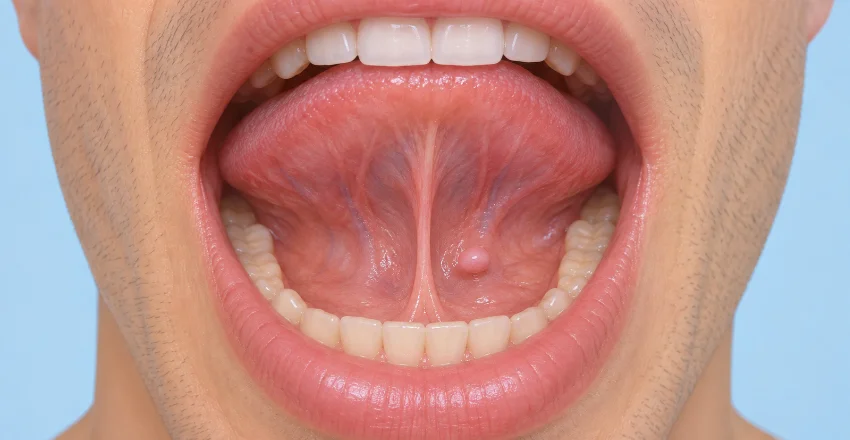
Your clinician will usually begin by inspecting and feeling the affected area. They may ask when it appeared, whether it hurts, and whether its size has changed. They will also consider recent injuries, medications, tobacco exposure, and recurring mouth sores. Many oral lesions can be identified during a physical examination. Persistent or suspicious changes may require additional testing or specialist referral.
A biopsy may be considered when the appearance or duration raises concern. Dental examinations can be especially useful because dentists routinely inspect oral tissues. Regular checks may identify changes that have not caused noticeable symptoms. The ADA emphasizes dental examinations as part of early oral-cancer detection.
How Long Should a Small Mouth Bump Last?
A minor canker sore often heals within one or two weeks. Irritation-related spots may improve after the offending tooth, food, or appliance stops rubbing the area. Salivary cysts can behave differently and may persist or return. Use time as one part of your decision, not the only factor. A rapidly changing lesion deserves attention even if it appeared recently.
Persistent symptoms become more important when paired with bleeding, hardness, numbness, or swallowing difficulty.
Frequently Asked Questions
Is a pimple under tongue usually serious?
Usually, a pimple under tongue is related to a minor mouth condition rather than something dangerous. Canker sores, irritation, and salivary problems are common possibilities. A lesion lasting beyond two weeks should still be examined.
Can you get acne inside your mouth?
True acne is not the usual explanation for a bump inside the mouth. Acne typically involves skin follicles and oil-producing glands. Oral bumps therefore have a different group of possible causes.
Can a canker sore form beneath the tongue?
Yes, canker sores can form beneath or on the tongue. They typically look white or yellow with a surrounding red border. They often heal within about one or two weeks.
What is a clear bubble beneath the tongue?
A clear or bluish swelling may represent a ranula or another salivary cyst. These form when saliva collects in tissue near a salivary gland. Larger or persistent swellings should be professionally evaluated.
Should I worry about a painless lump?
Pain is not a reliable way to judge whether a mouth lesion needs attention. Some concerning oral changes may cause little discomfort initially. A persistent, firm, growing, or unexplained lump should be checked.
Which doctor should I see?
A dentist is a practical first choice for many unexplained mouth lesions. A primary-care clinician can also examine the area and arrange further evaluation. Depending on the findings, you may be referred to oral medicine, oral surgery, or an ENT specialist.
The Bottom Line
A small bump beneath your tongue is often caused by a minor sore, irritation, or salivary problem. Most uncomplicated canker sores improve within one or two weeks. Still watch for changes rather than trying to pop the lesion yourself. Arrange a dental or medical evaluation if the area persists, grows, bleeds, hardens, or affects swallowing. Earlier assessment is also sensible when you cannot identify an obvious cause.
Persistent mouth changes are easier to address when a professional examines them directly. For more general wellness content, browse the Artandwriters Health section. This information is educational and cannot diagnose an individual mouth lesion. A dentist or physician should evaluate symptoms that concern you.


