

A Chihuahua Poodle mix can be affectionate, alert, bright, and surprisingly active for such a small dog. People commonly call it a Chi-Poo, Chipoo, Poochi, or Choodle. Because this is a mixed dog, size, coat, and personality can vary even within one litter.
| Key fact | What to expect |
|---|---|
| Parent breeds | Chihuahua and usually a Toy or Miniature Poodle |
| Adult weight | Often around 4–15 pounds, although individual dogs can fall outside that range |
| Coat | Straight, wavy, or curly, depending on inherited traits |
| Shedding | Often low, but never guaranteed |
| Temperament | Affectionate, alert, playful, intelligent, and sometimes vocal |
| Exercise | Daily play, walks, training, and mental stimulation |
| Grooming | Regular brushing, dental care, nail care, and coat maintenance |
| Lifespan | Often around 12–15 years, with individual variation |
| Home fit | Apartments or houses where owners can provide regular companionship |
Quick answer: A Chi-Poo is a small companion dog produced by crossing a Chihuahua with a Poodle. These dogs are often smart and affectionate, but their traits are not standardized. Expect differences in adult size, coat texture, shedding, energy, barking, and social behavior from one dog to another.
Key takeaways
- A Chi-Poo usually stays small, but mixed-breed adult size is never completely predictable.
- Coat type ranges from straight to curly, and low shedding is possible, not guaranteed.
- Daily exercise, mental stimulation, socialization, and rewards-based training remain important.
- Because of their small size, interactions with young children and much larger dogs need supervision.
- Responsible breeders should provide verifiable health screening for both parent breeds.
What Is a Chihuahua Poodle Mix?
A Chi-Poo is not a standardized breed with one predictable size, coat, or temperament. The American Kennel Club recognizes Chihuahuas and Poodles separately, not as a distinct breed. Each puppy can therefore inherit a different combination of physical and behavioral traits.
Most examples have a Chihuahua parent and either a Toy or Miniature Poodle parent. Both parents are small, intelligent companion dogs, although their coat and behavioral tendencies can differ. Understanding both breeds gives you a better picture than relying on a designer-dog label alone. More small-dog and pet-care explainers sit in the Artandwriters Pets section if you are still comparing companion breeds.
Size, Appearance, and Coat
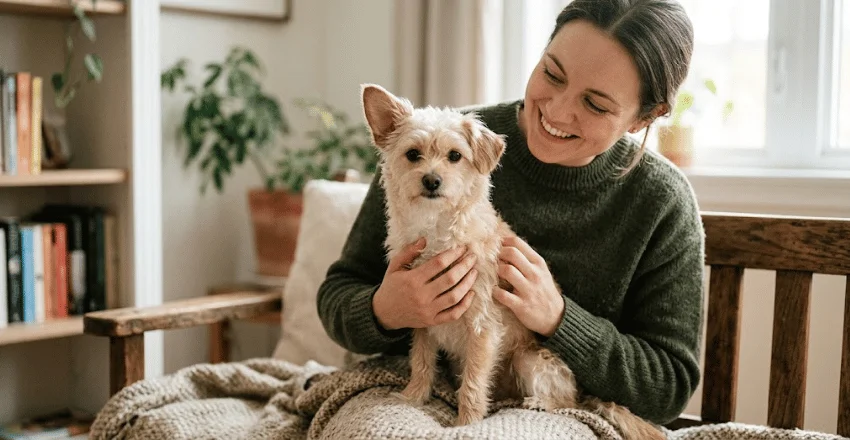
Adult size varies because there is no single Chi-Poo breed standard. PetMD reports that full-grown dogs commonly weigh about 4–15 pounds. Dogster gives a broader 8–18 pound range, illustrating how estimates can differ between populations.
Appearance can lean strongly toward either parent or fall somewhere between them. A puppy might develop erect Chihuahua-like ears, softer folded ears, or a combination of both traits. Coat colors can include black, white, cream, brown, fawn, gray, apricot, or mixed markings.
Coat texture deserves special attention because Poodle ancestry does not guarantee curls. Some dogs have soft waves, while others develop straighter or denser hair. The final coat often becomes clearer as a puppy matures.
Temperament: Smart, Attached, and Sometimes Vocal
Both parent breeds tend to form strong relationships with their people. Poodles are highly trainable and active, while Chihuahuas are alert, confident, and adaptable. A mixed puppy may combine affection and intelligence with an independent or watchful streak.
Companionship matters for these dogs because boredom can turn into unwanted behavior. PetMD notes that lonely or under-stimulated dogs may become more prone to excessive barking. Regular interaction, play, and training can give that energy a useful outlet.
Early social experiences also influence how a dog responds to visitors and unfamiliar situations. Calm introductions can help a puppy learn that new people and environments are normal. Genetics still matter, so socialization cannot guarantee a particular adult personality.
Are Chi-Poos good with children and other pets?
These small dogs can live successfully with children when everyone handles them carefully. PetMD advises close supervision because young children or much larger dogs can accidentally injure a tiny companion. Children should learn to avoid grabbing, dropping, chasing, or disturbing a resting dog.
Compatibility with other pets depends on the individual dog and its experiences. Controlled introductions are safer than assuming a small dog will automatically welcome every animal. Size differences deserve special attention during play, even when both animals appear friendly.
Exercise and Training Needs
Small size does not mean this dog should spend every day on a lap. Both parent breeds benefit from physical activity, play, and regular mental challenges. Short walks, indoor games, scent activities, and puzzle toys can all provide useful stimulation.
Rewards-based training is a sensible approach for a bright, people-focused puppy. Keep lessons short enough to maintain attention and practice useful behaviors throughout the day. Recall, calm greetings, handling, leash skills, and quiet behavior deserve early attention.
PetMD recommends safe socialization during a puppy’s early developmental period. New surfaces, sounds, people, handling experiences, and suitable dogs can become positive learning opportunities. Your veterinarian can help you balance socialization with age-appropriate disease precautions.
Apartment living can work well because these dogs need little physical space. Noise management may require more effort because alert barking can become a habit. Owners should also plan for companionship rather than leaving a social dog isolated for long stretches.
Grooming, Shedding, and Routine Care
Grooming needs depend heavily on the coat a puppy inherits. PetMD recommends a thorough brushing at least twice weekly as a general starting point. Longer or curlier coats may need more frequent brushing to prevent tangles and mats.
Low shedding is possible, especially when Poodle traits are strong. Low shedding does not make any dog completely hypoallergenic because allergens also occur in dander and saliva. People with allergies should spend time around the individual dog before making a commitment.
Dental care deserves as much attention as coat care in a small dog. PetMD notes that toy and small breeds have increased periodontal disease concerns and recommends frequent home tooth brushing. Your veterinarian can also advise when professional dental treatment becomes appropriate.
Ears and eyes need routine checks because their shape varies by dog. Folded ears may receive less airflow, while longer facial hair can irritate the eye area. Ask your veterinarian or groomer to demonstrate safe cleaning and trimming techniques.
Health Concerns and Lifespan
Mixed ancestry does not automatically protect a puppy from inherited health problems. PetMD lists patellar luxation, tracheal collapse, Legg-Calvé-Perthes disease, and dental disease among relevant concerns. These conditions are possibilities, not predictions, for every individual dog.
A recurring cough, persistent limp, painful movement, or sudden behavioral change deserves veterinary attention. PetMD also notes that a harness can help reduce neck pressure for dogs affected by tracheal collapse. Routine examinations can identify problems before owners notice obvious symptoms.
Published lifespan estimates also differ because there is no standardized population. Dogster lists approximately 12–15 years, while PetMD discusses a range influenced by both parent breeds. Genetics, preventive care, body condition, dental health, and individual disease risk all affect longevity.
Health testing to request from a breeder
| Parent | Screening worth verifying |
|---|---|
| Chihuahua | Patella, cardiac, and eye testing |
| Toy Poodle | PRCD-PRA DNA testing, eye examination, and patella evaluation |
| Miniature Poodle | Toy Poodle screenings plus a hip evaluation |
The Chihuahua Club of America encourages cardiac, patella, and eye testing for breeding dogs. The Poodle Club of America recommends PRCD-PRA, eye, and patella screening for Toy Poodles. Miniature Poodles have those recommendations plus hip evaluation.
Ask to see results rather than accepting a statement that the parents were “vet checked.” OFA maintains a public database for many submitted canine health-test results. Responsible screening cannot remove every risk, but it provides useful information before a planned breeding.
Finding a Chi-Poo in the United States
Start with local shelters and established rescue organizations if you are open to adoption. Mixed dogs may be listed under one parent breed instead of a designer name. Search several variations, including Chi-Poo, Chipoo, Chihuahua mix, and Poodle mix.
If you buy from a breeder, ask about both parents and request verifiable screening documentation. You should also receive veterinary records and clear information about the puppy’s living conditions. Be cautious when marketing language matters more than health, temperament, and responsible breeding practices.
The term “teacup” should not replace meaningful information about expected adult size. The AKC recognizes Standard, Miniature, and Toy Poodles, not a separate teacup variety. Extremely small puppies also need careful handling because their small size increases the risk of accidental injury.
Ownership costs extend well beyond an adoption fee or puppy price. Budget for veterinary visits, preventive care, food, grooming, dental care, training, supplies, and emergencies. A long-lived small dog can stay in the household for well over a decade.
Is This Mix a Good Match for Your Home?
| This mix may suit you when… | Think carefully when… |
|---|---|
| You want a compact companion | You need a dog that tolerates long daily isolation |
| You enjoy training and interactive play | You want almost no grooming or dental care |
| You can supervise young children | Your household includes rough handling or unsafe play |
| You accept some barking and personality variation | You need a highly predictable adult temperament |
| You can budget for veterinary care | You are choosing mainly for appearance |
The strongest fit is an owner who wants a small companion without assuming small means effortless. Daily attention, training, grooming, exercise, and preventive care still matter. Accepting individual variation also makes expectations more realistic before adoption.
Frequently Asked Questions
How big does a Chi-Poo get when fully grown?
Many adults stay under about 15 pounds, according to PetMD. Other published breed guides use wider ranges because these dogs lack a standardized size. The parents’ sizes provide a better clue than the hybrid name alone.
Is a Chihuahua Poodle mix hypoallergenic?
No dog can be guaranteed completely hypoallergenic. Some Chi-Poos shed little and may suit certain allergy-sensitive homes better than heavier-shedding dogs. Spend time with the individual dog before adoption if allergies are a major concern.
Do Chi-Poos bark a lot?
Some can be vocal because both parent breeds are alert. Barking may increase when a dog lacks exercise, interaction, training, or mental stimulation. Teaching calm behavior early can make alert barking easier to manage.
Are Chi-Poos good family dogs?
They can become affectionate family companions in homes that respect their small size. Young children should be supervised closely and taught gentle handling. The individual dog’s temperament and social history still matter more than its designer label.
How long do Chi-Poos live?
Several breed references place their typical lifespan around 12–15 years. You can’t predict a mixed dog’s lifespan precisely from its parent breeds. Preventive veterinary care, dental care, nutrition, exercise, and genetics all influence longevity.
Give a Small Dog the Care Its Size Deserves
A Chi-Poo can offer affection, intelligence, playfulness, and a compact size without being a low-effort pet. Learn about both parent breeds, meet the individual dog, and verify health information before committing. Good preparation matters more than choosing a puppy based on how it looks in a photo.
The site’s cat-care guide also shows a practical, veterinary-first approach to special pet needs. You can find other useful household guides through Daily Bites.